




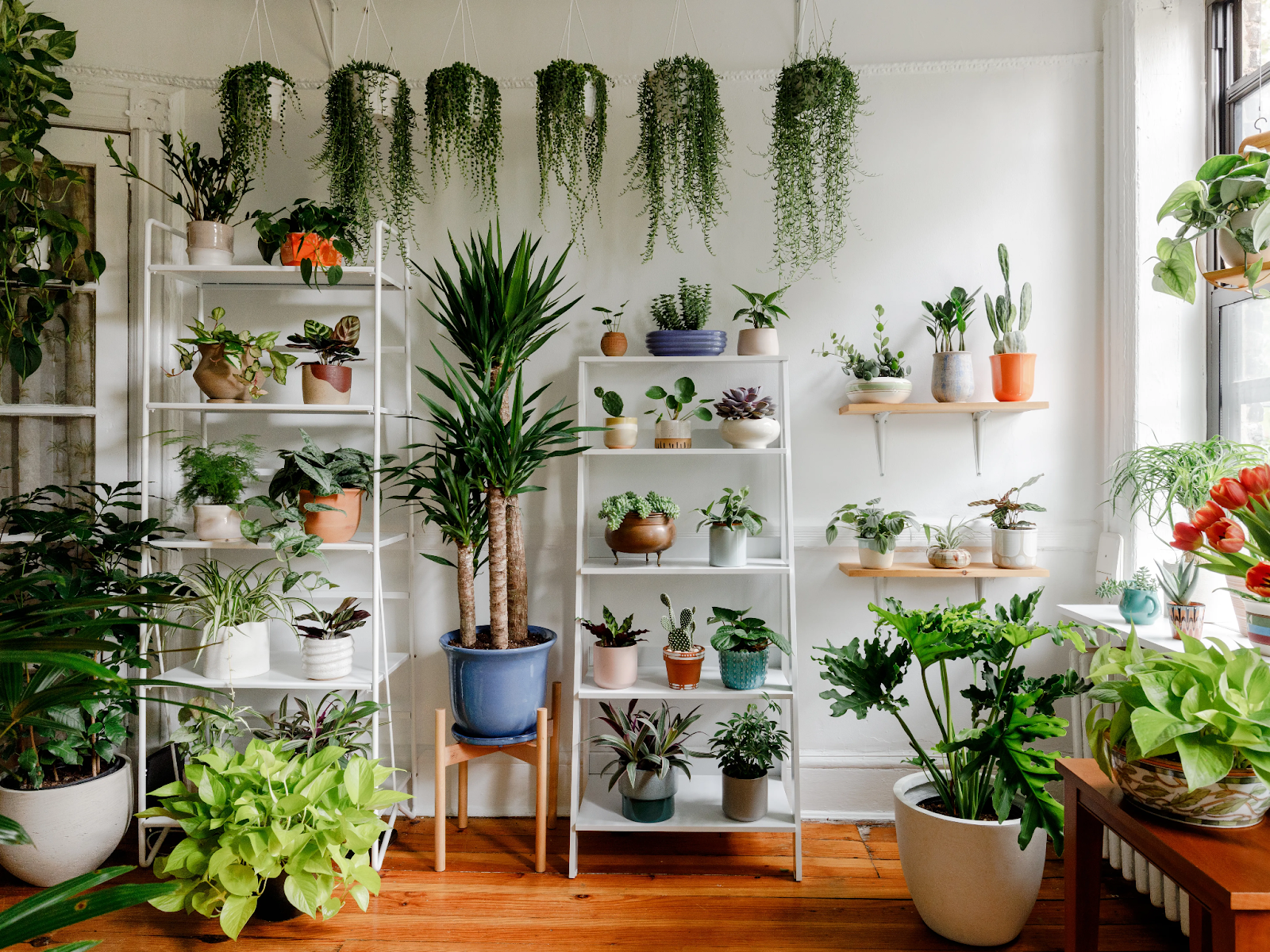
 As the weather slowly starts to get chillier, it might be time to start moving some of your potted plants indoors and getting ready for the weather switch. Some of your spring and summer plants might be able to survive through the fall, but once the dry winter hits, it is crucial that you move them inside to keep them from dying from the dryness, the frost, or whatever other winter weather phenomena your local area faces. In contrast, if you have never had a green thumb, all that can change this fall! Cultivating indoor plants is a great way to improve your overall life and also get a leg up in your gardening skills come the following spring.
So why is having indoor plants such a widely talked about idea? In general, having indoor plants improves the air quality of your home. As the weather begins to get a little colder, doors and windows are being closed and shut off completely from the outside to prevent any cold air from entering. Unfortunately, this also prevents fresh air from entering too. Indoor plants can help to purify the air by absorbing carbon dioxide and releasing oxygen into your home. Indoor plants also remove toxins like benzene and formaldehyde, which are typically present in indoor environments. They can help to control humidity indoors as well since during the colder months, the air is typically dry due to running the heat every day. Indoor plants will help to release moisture and increase humidity levels. This is great for your health (and even the health of your wooden furniture). Indoor plants have also been proven to improve moods and reduce stress. Their presence in your home can help to create a calming and nurturing space and can be very beneficial for those who begin to feel the symptoms of seasonal depression when the temperatures begin to drop.

Below is a list of a few very easy and low maintenance plants that you can add to your home and other indoor spaces, especially if you’re new to the gardening lifestyle.
These plants are extremely sturdy and can tolerate all sorts of low light conditions (making it perfect for the colder months when the sun begins to set earlier). They also do not require frequent watering.
These plants are extremely adaptable and will grow in both dull or bright light settings. They quickly produce baby plants as well that you can re-pot to produce more spider plants and set them up around your home. The only major requirement is to keep the soil of these plants moist, but not too moist.
Succulents are typically the most common plants that beginner gardeners try to invest in. They do prefer bright light, so keeping them on your window sill or by an open glass doorway works best, but they do not require frequent watering and can survive many days without moisture.
If you prefer something with a little more color, try to pot one of these in your home! They are known to tolerate moderate or even relatively low light conditions and they do prefer evenly moist soil, so just remember to water them a few times a week to keep it alive.

There are a few key things to remember when you set up your indoor plants. Of course, every plant is different, so you have to follow the watering, soil, and light instructions for each plant. In general, however, depending on the plant you chose, you’d likely have to water it a few times a week, leave it in a moderately bright area with access to sunlight (through a window), and make sure it has the adequate amount of soil (and the adequate amount of moisture in said soil). It’s also important to remember that if your plant is starting to outgrow the pot it’s already in, then you must replant it into a larger container. This gives it adequate space to continue growing. Be sure to also check that as your plants grow, you don’t see any diseases forming on them. Some signs of diseases are white dots on the leaves, sticky residue on the leaves or stems, and a potentially strong or bad odor being emitted from the plants. Every plant is different, and if you prefer a low maintenance method, just purchase plants that are all similar and require similar conditions so you don’t have to memorize too many ways to care for your plants!


Powered by Bipper Media - a world class SEO agency. Check your website SEO authority score instantly here. Get VIP SEO services to grow your business!


