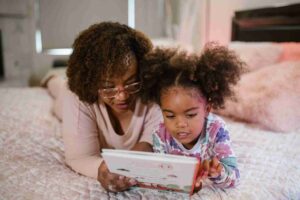
If you attended preschool, you likely have some fond memories of that time. Preschool is fun for children. They get to make new friends and enjoy making discoveries.
A child’s experiences in preschool contribute to their developmental milestones and set them up for success in the future.
Perhaps you still feel that education is not very necessary for a young child. This article gives seven solid reasons why early childhood education is beneficial for your child.
1. Early Childhood Education Supports Your Child’s Development
Early childhood educators have professional training. Thus they develop learning routines that encourage a child’s development.
It may seem as if your child will only spend time in preschool singing and playing. But, even the songs children sing in preschool are learning tools.
Children learn to communicate using sounds and gestures as they sing fun songs in preschool. Such activities help them develop language skills. Taking your child to preschool exposes them to more vocabulary than they hear in the house.
Educators engage children in conversational games. They also encourage them to speak by asking them questions. A child who only spoke a few words before going to preschool starts speaking more after attending preschool.
Early childhood education centers incorporate hands-on activities during learning. These activities help improve your child’s cognitive skills. As your child engages in the activities, their cognitive learning abilities increase.
2. It Prepares Your Child for Future Schooling
You may think an early learning center is no different from a daycare center. But, that is a wrong assumption. The staff in preschools have an early childhood education degree or certificate.
When you hand over your child to them, the educators give them training to prepare them for kindergarten.
An early childhood educator has the skills to identify each child’s learning needs. Thus, all the learning experiences are customized to cater to individual needs.
If your child learns quickly, the educator introduces more advanced learning. Some early education centers even have learning programs for special needs children. Thus, your child will learn at their own pace.
3. It Helps Your Child Become More Independent
Children rely on their caregivers at home or in a daycare center for everything. But, this is not the case in a preschool.
Children learn new things every day while in preschool. Teachers give children responsibilities like arranging the toys or clearing the table.
As children learn new tasks, they are able to take better care of themselves. Thus, they become more independent.
As your child learns to do more things for themselves, they also become more confident. Thus, they are more willing to try out new things.
Young children also learn to help others in the classroom, which makes them more responsible.
4. It Builds Your Child’s Social Skills
If your child is always at home, you may have noticed they don’t do well in environments with many people. They may also have a hard time relating with other children.
When you enroll your child into a preschool, they interact with other adults and children in a safe environment.
Your child gets to build relationships with other people besides the members of your household. They make new friends of their age and build close connections with their teachers.
The interactions in a preschool classroom grow your child’s social skills. They also enhance their conversational skills.
Building social relationships contributes to your child’s emotional development. It also equips them with adaptive social skills, which are essential, especially in adulthood.
5. It Offers Your Child a Structured Environment
Early education centers provide children with a structured environment, which promotes learning. Children learn to share, take turns, and follow instructions. They learn to follow a schedule which is vital for future schooling.
Teachers gently guide children and help them navigate challenges. They teach them appropriate responses to different situations, which minimizes conflicts.
Children thrive in a structured environment because there is minimal conflict. They learn to share the educator’s attention and cooperate with others.
The preschool structure creates a perfect balance between learning and playtime. Thus your child’s development is more balanced.
6. It Nurtures Curiosity and Creativity
Curiosity promotes learning, and preschool teachers know this. Therefore, they engage your child in activities that nurture curiosity to promote learning.
Young children are very imaginative. Thus when a teacher plays make-believe with children, they learn while having fun.
Teachers will even use props in make-believe games to help a child’s imagination. Such games also enhance your child’s creativity.
Teachers use a child’s interests to encourage exploration. Thus it becomes easier to discover areas in which your child is gifted.
7. It Equips Your Child With Math and Literacy Skills
Math and literacy skills are invaluable as your child furthers their education. Thus, it is best to develop these skills early on. Rhyme games and alphabet songs help your child learn the relationship between letters and sounds.
Reading stories from books aloud entertains children and makes them interested in reading. Discussing books also enhances your child’s language and literacy skills.
Children match items on a board, do puzzle work, and play counting and sorting games in a preschool class. These activities help your child understand patterns, categories, and sequences.
Understanding these things is vital for developing math skills. These games are also useful in problem-solving, which is an indispensable math skill.
Preschool teachers do not force your child to sit through a class. Instead, they incorporate a math and literacy curriculum in games and songs. Hence your child enjoys learning.
Prepare Your Child for Success
Education is vital at all stages in life, and beginning early makes things easier for your child in the future. Give your child a bright future by enrolling them in an early childhood education center near you.
The Learning Experience is dedicated to creating a healthy, safe, and enjoyable learning environment in which our children enjoy learning, playing, and growing. Through a variety of early educational resources, activities, and social contacts, they attain success on their own while developing socially, intellectually, and cognitively.
Contact us today to enroll your child.
The Learning Experience – Huntington Beach
17131 Beach Blvd
Huntington Beach, CA 92647
(657) 244-8948
https://thelearningexperience.com/center/huntington-beach/
Early childhood education provides a strong foundation for children by supporting their emotional, social, and cognitive development. Engaging in structured learning environments helps children develop essential skills, such as communication and problem-solving, which are crucial for their future success.
When selecting an early childhood education center, consider factors such as the center’s curriculum, teacher qualifications, and the overall environment. It’s also beneficial to visit the facility, meet the staff, and observe how they interact with the children to ensure it aligns with your values and expectations.
Most early childhood education programs accept children as young as six weeks to three years old. However, starting around age three is common, as this is when children are generally ready to engage in more structured learning and social interactions.
Yes, children who attend early childhood education centers are often better prepared for kindergarten. They typically develop key skills such as independence, teamwork, and basic academic knowledge, which can help ease the transition into formal schooling.
You can support your child’s learning by engaging them in educational activities, reading together, and encouraging curiosity and exploration. Simple routines, such as discussing their day at the education center, can reinforce their learning and development.
Yes, early childhood education centers are typically regulated by state licensing agencies to ensure quality and safety. These regulations cover staff qualifications, facility standards, and child-to-staff ratios, ensuring that children receive a safe and enriching environment.