At a young age, the concept of sharing can be difficult for children to grasp. Whether it’s sharing toys, games, or anything else they value, many children may be hesitant to let go of what they have.
Sharing is an essential skill that all young children need to learn to develop healthy and beneficial relationships with others as they grow older. By learning how to share from a very early age, your child can set themselves up for social and emotional success.
Fortunately, there are a number of things that parents and caregivers can do to help teach young children how to share. By establishing clear boundaries from an early age, teaching compassion and empathy, and spending time modelling the behaviour you want your child to learn, you can empower your child to become a kind and considerate member of the family and community.
This article will explore the concept of sharing, why it is so important for young children to learn, and some tips for teaching children how to share effectively.
What is Sharing, and Why is it So Important?
Human beings are naturally social creatures. In order to thrive, we need to interact with others and form positive relationships. Sharing is a fundamental part of human interaction and is essential for developing healthy social skills.
Sharing can be defined as the act of giving something that you own or have control over to someone else, usually with the expectation that they will do the same. When we share with others, we demonstrate a number of important social skills, such as empathy, cooperation, and respect.
These skills are essential for developing strong and positive relationships with others. Sharing also helps children to develop a sense of community and belonging. It teaches them that they are not alone in the world and that there are others who care about them and their wellbeing.
In addition to developing healthy social skills, sharing also has a number of other benefits for young children, including:
Encouraging Creativity and Imagination
When children share, they are often exposed to new ideas and ways of thinking. This can help to encourage creativity and imagination.
Fostering a Sense of Trust
Sharing also helps to foster a sense of trust between children. When children know that they can rely on others to share with them, they are more likely to trust those people.
Building Confidence
By learning how to share, young children can build their confidence and self-esteem. Knowing that others value them enough to share with them can make children feel good about themselves and encourage them to engage in other positive behaviours too.
Why Does My Preschooler Find it Hard to Share?
Many young children find it difficult to share, particularly if they have never been taught how to do so effectively. Some of the main reasons that your preschooler may struggle with sharing include:
Lack of empathy
Young children can sometimes be quite self-centre and focused on their own needs and wants. This can make it hard for them to understand why someone else would want or need to use the same toy or object.
Insecurity
Children may also be hesitant to share because they are afraid that they will not get the toy back or that someone else will take it from them. This can lead to feelings of jealousy and insecurity.
Attachment
Young children can become very attached to certain toys or objects. This can make it hard for them to let go, even if only for a short period of time.
How Can I Teach My Child to Share?
If you want to help your child learn how to share effectively, there are a number of things that you can do. Try to implement the following:
Establish Clear Boundaries from Early On
It is important to establish clear boundaries with your child from an early age. Explain to them what sharing means and why it is important. Help them to understand that there are certain things that they need to share, such as toys and books, and other things that they can keep to themselves, such as their snacks or personal possessions.
Model Sharing Behaviours
One of the best ways to teach your child how to share is by modelling good sharing behaviours yourself. The truth is, young children learn a lot by watching and imitating others. So, if you want your child to share with others, be sure to do so yourself whenever possible. This will help to show them that sharing is a positive behaviour that should be encouraged.
Encourage Turn-Taking
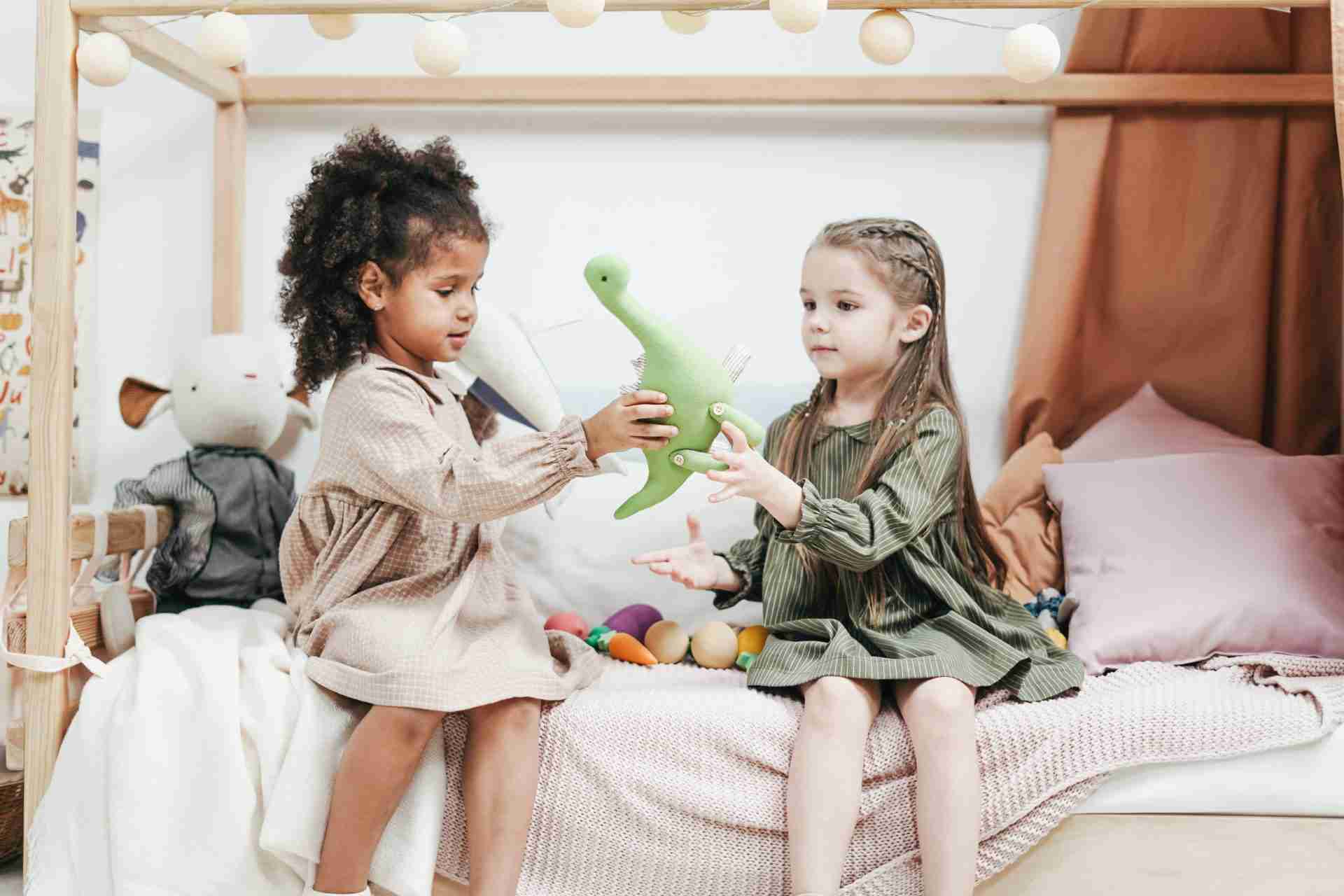
When children are playing together, it is important to encourage them to take turns. This will help them understand that sharing doesn’t mean that they have to permanently give up their toy or object. Instead, they can learn that it is simply a matter of taking turns using an object and then returning it to its original owner.
Incorporate Sharing Activities into Their Play
Another great way to help your child develop healthy social skills is by incorporating sharing activities into their playtime. There are a number of different sharing games and activities that you can do with your child to help them practice their skills.
One example is the “Which Hand?” game. To play, simply ask your child to put one of their hands behind their back. Then, give them an object, such as a toy or a book, and ask them to show you which hand it is in.
This will allow your child to practice sharing by asking for help from others and learning how to give back an object they are holding. And with some practice and encouragement, your young child will soon be a pro at sharing!
Wrapping It Up
Sharing is an important part of growing up and will help your child to feel good about themselves, build confidence, and form positive relationships with others. By teaching your child how to share effectively, you can help them to develop healthy social skills and relationships with others.
So if you want to help your child learn how to share effectively, try some of the tips above, such as setting clear boundaries, incorporating sharing activities into playtime, and modelling good sharing behaviours yourself. With time and practice, your child will become a master at sharing, and you can rest assured that they will be well-prepared for the many social interactions and experiences ahead of them.
At The Learning Experience, we encourage our young students to share and play together in order to build social skills and develop positive relationships. Through play-based learning activities, arts and crafts projects, storytime, and more, we help our students learn valuable lessons about sharing and cooperation that will serve them well. If you’re interested in learning more about our curriculum or would like to schedule a tour of our East Finchley facility, please get in touch with us today!
The Learning Experience – East Finchley Day Nursery and Preschool
250 East End Rd
London N2 8AU
020-8444-2638
https://thelearningexperience.co.uk/center/east-finchley/