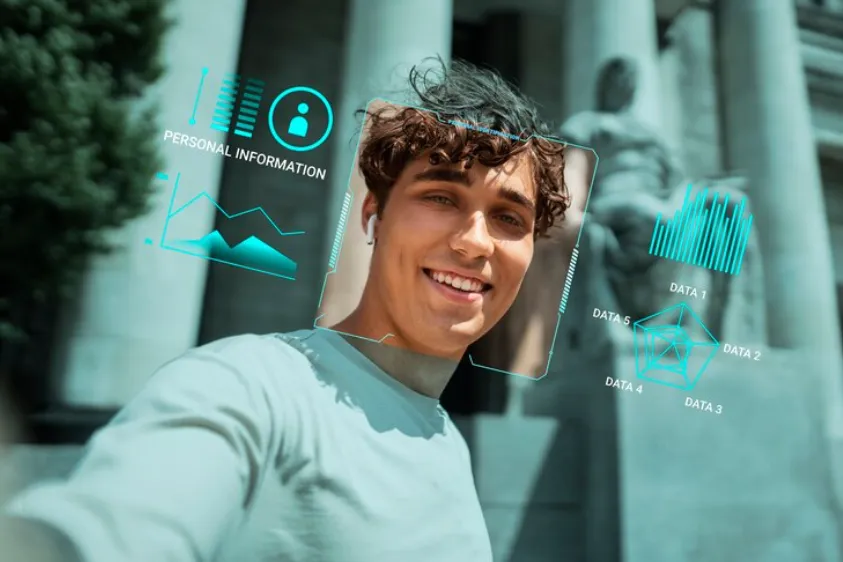
What is Facial Recognition Technology?
Facial recognition is software that compares two facial images to each other to conclude how similar they are. If the images are a close match, then the software can identify who someone is. For example, if you own a phone with a face ID, when you set up the software, you will move your face from side to side for the phone to capture your facial features with biometrics. Then, when you want to unlock your phone, your phone will scan your face and it will decide if your face matches the captured faceprint close enough to identify that it is you.
How the Technology is Used
While the public may be more aware of face ID on a phone, the technology is used in various ways. The following are some places that it is used and how:
Airports
Airport security has tightened over the last twenty years so it comes as no surprise that face ID is used there to ensure all travelers’ safety. The most common place in the airport to see this technology being used is at border checkpoints. The data scans people’s faces at these locations to check if everyone’s faces match their passport picture or visa.
Schools
Some schools have begun using facial recognition in the lunchroom. They believe that this technology will make it quicker and easier for children to pay for their lunch. During Covid-19, many schools also believe that the implementation of face ID helps to keep everyone safe.
Retailers
It may come as a surprise that many of the places you shop for items are using face recognition software. Macy’s and Albertsons are some of the first retailers to use the technology. One primary reason that some retailers are using or considering face ID is to monitor theft in their stores.
Makeup Brands
The days of trying to find which foundation matches your skin tone are behind you. Makeup brands like IT Cosmetics are using facial recognition to help you find your perfect shade with online “try it on” functions. First, you must consent to a waver and then a filter will be applied to your face on the phone so you can play with different foundation shades digitally.
Religious Buildings
Some churches around the world are beginning to use face ID. They are doing it to track attendance and ensure the building is safe from vandalism.
Advertisements
Stores like Walgreens have taken advertisements to a whole new level. When you go into a Walgreens, scanners can assess how old a customer is and their gender. Once they know who they are targeting, their customers will get individualized ads that they believe will be of interest to the customer.
Issues with Privacy
Face ID Misuse
Not everyone is accepting of the idea of facial recognition. Some people believe it infringes their privacy rights. Face ID misuse has been a concern of many people since it was discovered that China uses the technology to monitor its civilians through surveillance systems. While thankfully the United States is not currently doing that, many Americans are skeptical about if it will always stay that way.
Security Breaches
Like most technology, facial recognition is susceptible to security breaches. This increases the risk for identity theft and stalking because faces are easy to pick out and they cannot be encrypted. While this is concerning, there is something that can be done. Cloud-based systems encrypt their data so if technologies with face ID used the cloud, then it would be harder for people to steal face ID data.
Lack of Informed Consent
Trying to stay out of the public eye has become harder than ever. With the addition of TikTok and other media platforms, you never know when you could be caught in the background of a video that is distributed all over the web. Additionally, universities and other institutions have been caught infringing on people’s privacy. Stanford University was caught in 2015 live streaming a video of a café that published a set of 12,000 images. In 2016, Duke University recorded and published students walking to class. Duke ended up releasing around 2 million frames of footage. While they got caught and removed the data, it is not rare for incidents like this to happen. Your face is probably all over the web and you don’t even know it.
The Advantages
While there are some major concerns with facial recognition, it isn’t without its benefits. The following are some of the advantages of using face ID:
- Helps discover missing people
- Makes it harder for someone to break into a phone
- Helps retailers minimize theft
- Makes it easier to identify criminals
Should You Trust Facial Recognition?
People have differing opinions on whether the technology is trustworthy. There are many factors that someone needs to consider before deciding if the advantages outweigh the disadvantages. Ultimately the trust in this technology is based on how concerned someone is about their privacy. While one person may value their privacy, another person may not care at all. One thing is for certain though, no matter where you fall, there is no escaping technology.
Facial recognition technology is a software tool that analyzes and compares facial images to determine their similarity. This technology can identify individuals based on their facial features and is commonly used in devices like smartphones for security purposes.
The technology works by capturing an image of a person’s face and converting it into a digital format. It then analyzes key features, such as the distance between eyes and the shape of the jawline, and compares them to a database to find matches.
Facial recognition technology offers numerous benefits, including enhanced security, faster identification processes, and convenience for users. It streamlines access to devices and facilities while providing a reliable method for verifying identities.
Yes, there are risks, including privacy concerns and the potential for misuse. Issues such as data security breaches and bias in the technology’s accuracy can lead to wrongful identifications or invasions of privacy.
Trusting facial recognition technology depends on understanding both its benefits and risks. While it provides convenience and security, it’s essential to stay informed about the potential implications on privacy and data protection.
To protect your privacy, consider limiting the use of facial recognition features on your devices, regularly updating your privacy settings, and being aware of how your data is stored and used by service providers.