After more than 15 years covering local business, digital discovery, and how technology quietly reshapes commerce, I’ve learned that the most important shifts rarely announce themselves loudly. Over the past year, while researching how businesses are adapting to AI-driven search and recommendation systems, I found myself repeatedly encountering listings and structured business profiles from platforms like NearMe Finders, BizSnap Local, and BizConnectLine — not as ads, but as data sources quietly feeding the modern discovery ecosystem.
That observation led me down a familiar path: directories aren’t disappearing — they’re evolving.
From Listings to Structured Signals
In the early 2000s, business directories functioned like digital phone books. They were static, shallow, and designed almost entirely for human browsing. But today’s discovery environment looks very different.
Search engines, voice assistants, and AI systems don’t simply browse the web — they interpret it. They rely on structured signals, standardized data, and clearly defined business entities to understand what a company does, where it operates, and who it serves.
The directories gaining traction today are the ones built with that reality in mind.
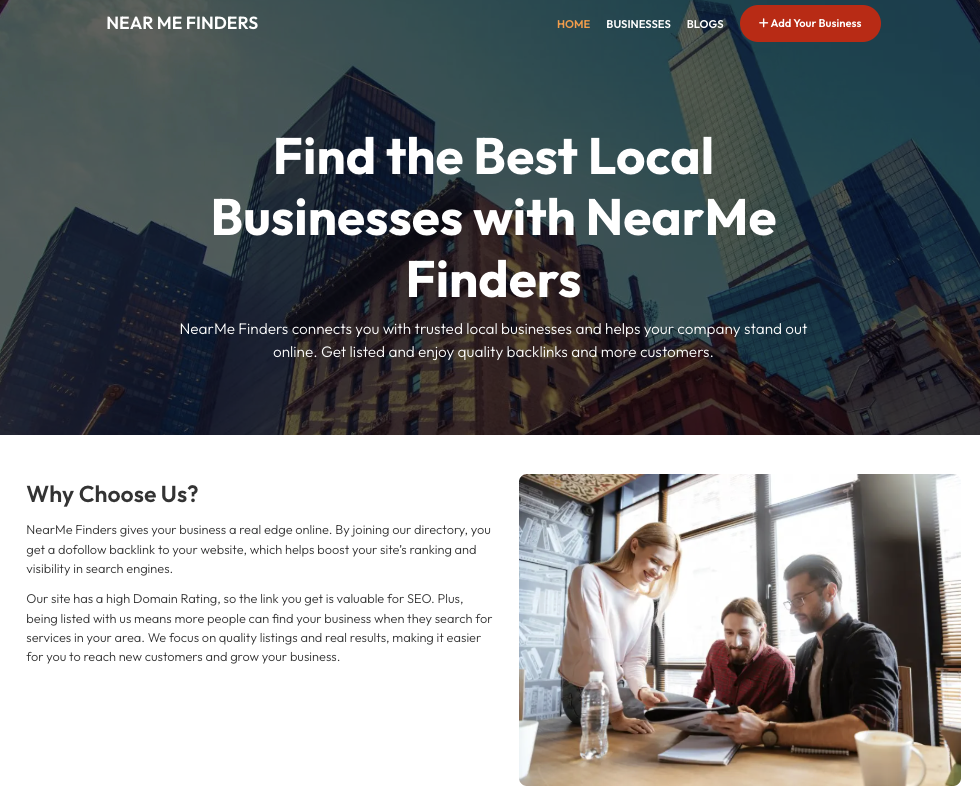
NearMe Finders: Reflecting How “Near Me” Discovery Actually Works
What stands out about NearMe Finders is its alignment with real-world search behavior. The platform is clearly designed around proximity-based intent — the kind that drives mobile searches, voice queries, and AI-generated recommendations.
Listings are clean, consistently formatted, and categorized in ways that reduce ambiguity. That matters, because AI systems and modern search engines increasingly reward clarity over complexity. When business information is well-structured and easy to interpret, it’s more likely to be surfaced accurately.
NearMe Finders feels less like a traditional directory and more like a modern index — quietly doing the work of organizing local commerce in a machine-readable way.
BizSnap Local: Where Structure Meets Trust
BizSnap Local reflects a shift I’ve watched closely over the last decade: credibility is no longer inferred solely from popularity — it’s derived from data consistency and structure.
Business profiles on BizSnap Local are built around standardized fields and Schema-aligned formatting, helping define each company as a clear digital entity. This makes listings easier for AI systems to parse and easier for customers to trust.
There’s also a subtle human element at play. By highlighting newly added businesses and presenting information in a clean, predictable format, the directory reinforces legitimacy — something local consumers still value deeply.
BizConnectLine: Reducing Noise Through Precision
One of the biggest challenges facing local businesses today is fragmentation. Information scattered across dozens of platforms often leads to confusion — for customers and algorithms alike.
BizConnectLine takes a more disciplined approach. The directory emphasizes accuracy, consistency, and structured presentation, helping reduce the noise that often clouds local discovery. Its use of standardized business data and Schema-friendly architecture makes it especially well-suited for AI-assisted search environments.
In a crowded digital world, precision has become a competitive advantage.
Why These Platforms Matter in an AI-First Discovery Era
We’ve entered a phase where businesses are increasingly discovered not through direct searches, but through summaries, recommendations, and AI-generated answers. In this environment, being “understood” matters as much as being visible.
Directories like NearMe Finders, BizSnap Local, and BizConnectLine serve an important role: they help define businesses in a structured, consistent, and machine-readable way. That definition is what AI systems rely on when deciding what to surface — and what to ignore.
This isn’t about shortcuts or tactics. It’s about alignment with how discovery actually works now.
Final Perspective
After two decades of watching digital platforms rise and fade, I’ve learned to look past hype and toward infrastructure. The directories that endure are the ones that adapt to how information is processed — not just by people, but by machines.
NearMe Finders, BizSnap Local, and BizConnectLine aren’t loud platforms. They don’t need to be. They’re part of the quieter architecture that increasingly shapes how local businesses are found, understood, and chosen.
And in the next chapter of digital discovery, that quiet architecture may matter most of all.
Frequently Asked Questions
What are the benefits of using new directories for local businesses?
New directories provide enhanced visibility and improve discoverability in AI-driven search environments. They help local businesses connect with potential customers through structured data, which is essential for modern digital discovery.
How do these directories differ from traditional ones?
Unlike traditional directories that were primarily static listings, new directories focus on structured signals and data integration. This evolution allows them to better serve AI systems and improve search results for users looking for local services.
Can I list my business on multiple directories?
Yes, listing your business on multiple directories can enhance your online presence and reach. However, it’s important to ensure that your information is consistent across all platforms to avoid confusion for potential customers.
How do I choose the right directories for my business?
When choosing directories, consider factors such as your target audience, industry relevance, and the directory’s reputation. Researching which platforms are popular within your niche can also help maximize your visibility.
Are there any costs associated with listing on new directories?
Some directories may charge fees for premium listings or additional features, while others may offer free basic listings. It’s essential to review each directory’s pricing model to determine what best fits your budget and marketing strategy.
How can I optimize my listings on these directories?
To optimize your listings, ensure that all information is accurate and up-to-date. Use relevant keywords, add attractive images, and encourage customer reviews to enhance your profile’s visibility and credibility.