



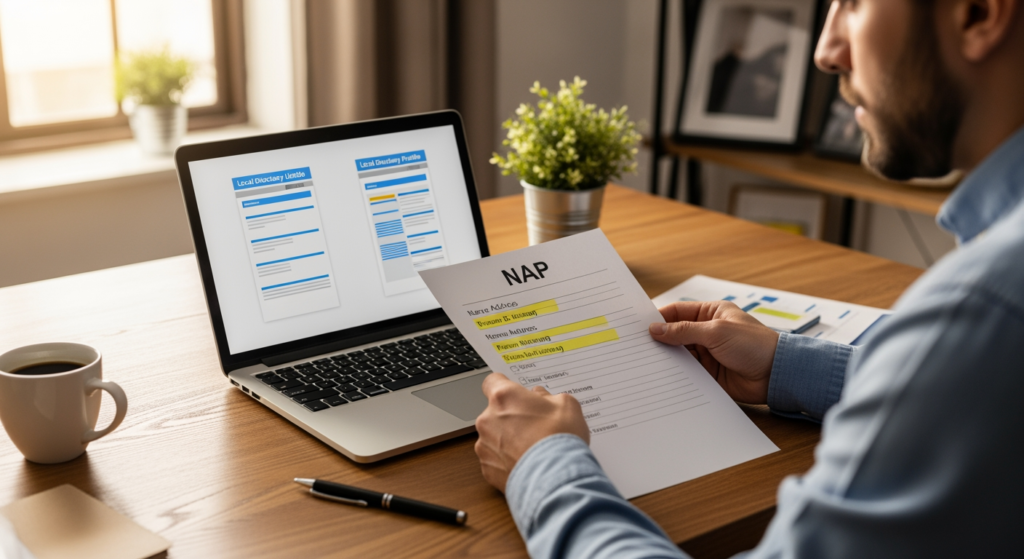
Keeping your business information consistent across the web has always mattered for local visibility, but AI-driven search experiences raise the bar on accuracy and clarity. If you’re trying to earn more trust signals in search results—especially when AI systems summarize businesses—you need a tighter process than “we updated Google once.” This AI Overviews citations checklist is for small business owners, marketers, and website managers who want a practical way to audit and improve local citations without guesswork. Done well, citations help reduce confusion about who you are, where you operate, and how customers can contact you. Done poorly, they can quietly create mismatches that ripple across directories, maps, and data providers. Use the steps below to prioritize fixes, document changes, and build a repeatable routine you can run in 2026 and beyond.
For a broader foundation on how local visibility works across different scenarios, see Understanding Local SEO for Different Business Models and Markets.
Bottom Line Upfront: 2026 Citation Priorities
- Consistency beats volume: Fewer, accurate listings typically outperform many conflicting ones.
- Entity clarity matters: Your business name, category, and service area should be unambiguous everywhere.
- Duplicates are silent killers: They split trust signals and can confuse map and directory ecosystems.
- Structured data helps: Clean on-site schema can reinforce the same facts your citations publish.
- Make it recurring: Citations drift over time—treat audits as maintenance, not a one-time chore.
How Local Citations Feed AI-Driven Search Summaries
A “local citation” is any online mention of your business’s core identity details—commonly your name, address, and phone number (often called NAP), plus your website, categories, hours, and service area. In AI-driven search experiences, systems may synthesize information from multiple sources to present a concise overview. If your business details vary across sources, the system has to “choose” what’s true, which can lead to incorrect or incomplete summaries.
Think of citations like a chorus: when every singer is on the same note, the song is clear. When half the group is in a different key, the audience still hears something—but it’s not the version you intended.

The Real Cost of Citation Drift in 2026
Inconsistent listings can create practical problems that don’t always show up as a single “SEO error,” but still affect outcomes:
- Lost leads: Customers call the wrong number, visit an old address, or message a profile you no longer monitor.
- Operational headaches: Staff spend time answering “Are you still located at…?” instead of serving customers.
- Trust friction: Conflicting hours, categories, or business names can make your brand look unreliable.
- Slower improvements: When data conflicts, it can take longer for platforms to reflect updates consistently.
Note: Visibility outcomes vary by market, competition, and platform behavior. The goal here is to reduce avoidable confusion and strengthen consistency signals.
High-Priority Mistakes That Break Local Listings
- ✓ Using multiple business names (e.g., “ABC Plumbing” vs. “ABC Plumbing & Drain”) — pick one real-world name and use it everywhere.
- ✓ Different phone numbers across platforms — avoid swapping tracking numbers without a plan; consistency is the priority.
- ✓ Suite numbers formatted inconsistently (Ste vs. # vs. Suite) — choose one format and standardize it.
- ✓ Duplicate listings left unresolved — duplicates can split signals and confuse customers.
- ✓ Wrong primary category — categories influence which searches you appear for; don’t “category stuff.”
- ✓ Hours that don’t match reality — especially seasonal hours and holiday exceptions.
- ✓ Mixing service-area and storefront rules — if you hide your address on some platforms but show it on others, verify what’s accurate for your model.
- ✓ Uncontrolled user edits — some platforms accept public suggestions; monitor and correct when needed.
Your 2026 Action Plan for Cleaner Citations
- ✓ Create a “source of truth” NAP document — one internal record with your exact business name, address formatting, main phone, website URL, hours, and service area.
- ✓ List your top platforms first (high priority) — start with major map/search and the directories that already rank for your brand name.
- ✓ Audit for duplicates and near-duplicates — same business, slightly different name/address/phone is still a problem.
- ✓ Fix identity fields before enhancements — correct NAP, categories, and hours before adding photos, posts, or offers.
- ✓ Standardize your website URL format — choose https, decide on www vs non-www, and use the same version across citations.
- ✓ Align categories with real services — use the closest primary category and a small set of accurate secondary categories.
- ✓ Match service areas to reality — keep your coverage consistent with what you actually serve (and can support operationally).
- ✓ Document every change — track date, platform, login owner, what changed, and what you’re waiting to verify.
- ✓ Schedule a recurring maintenance check — quarterly is a common cadence; monthly if you’re in a high-change environment (moves, new numbers, rebrands).
- ✓ Reinforce with on-site schema — ensure your website clearly states your business identity details so your site supports your listings.

Professional Insight: The “One Field” That Causes Most Confusion
In practice, we often see businesses focus on the big items (like the main directory profile) while overlooking small formatting differences—especially suite/unit formatting and phone number variations. Those “tiny” mismatches tend to multiply across platforms because other sites copy them. Cleaning up one field consistently across your ecosystem can reduce a surprising amount of downstream inconsistency.
When DIY Citation Cleanup Stops Making Sense
- You find multiple duplicates and can’t get them removed or merged after repeated attempts.
- You recently rebranded, moved, or changed phone numbers and updates aren’t sticking across platforms.
- Your business has multiple locations and you need a standardized, scalable process.
- You operate in a regulated or high-trust industry where incorrect info creates serious customer friction.
- You don’t control logins for key listings (former employee/agency owns access).
Common Questions About Citation Accuracy
Do I need to be listed in hundreds of directories?
Not necessarily. Many businesses benefit more from accurate, consistent listings on the platforms that customers actually use than from sheer quantity. Start with accuracy and coverage, then expand thoughtfully.
What business details should be identical everywhere?
Your core identity fields should match: business name, primary phone number, address formatting (or hidden address if you’re service-area only), website URL, and hours. Categories and descriptions should also be consistent, even if character limits vary.
How often should I review my listings?
A recurring cadence helps because listings can change due to data syncing, user edits, or platform updates. Many small businesses review quarterly, and more often during moves, rebrands, or seasonal hour changes.
Can my website help reinforce my business information?
Yes. Clear contact information, consistent formatting, and structured data (like JSON-LD schema) can support consistency and reduce ambiguity for both users and systems that interpret business entities.
Why do duplicates keep showing up after I fix them?
Duplicates can reappear when older data sources resurface or when platforms ingest information from third-party providers. Ongoing monitoring and documentation make it easier to respond quickly when they return.
Taking Control of Your Local Data in 2026
Accurate citations are less about chasing every directory and more about building a clean, consistent identity footprint that platforms can trust. Use the checklist to standardize your “source of truth,” eliminate duplicates, and keep your details aligned across the web. If you treat citation management like routine maintenance, you’ll spend less time putting out fires and more time improving the parts of your online presence customers actually see.
Want More Information?
Download our free resource to learn more about this topic.
