



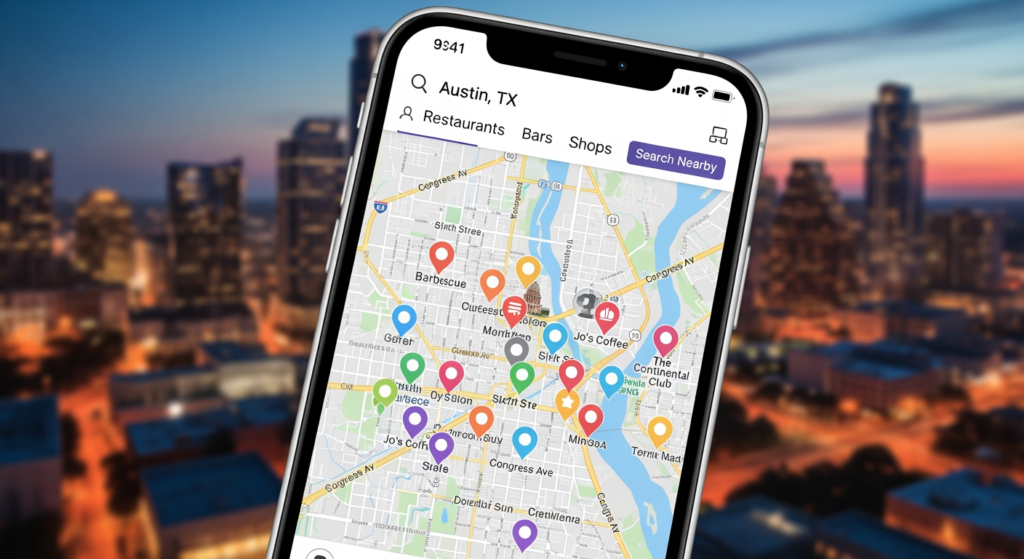
Seeing competitors show up for “near me” searches while your business stays buried is frustrating—especially when you’re literally nearby. If you’re a local business owner or marketing manager trying to understand near me seo austin tx, the real issue usually isn’t one “missing trick.” It’s how Google connects location intent (“near me”), your Google Business Profile, and your website’s authority signals into a single confidence decision. During the winter months, many businesses also notice demand shifts that make visibility gaps feel even bigger.
If you want a deeper foundation for how rankings are produced across Search and Maps, start with How Search Visibility Actually Works.
Bottom Line Upfront: Why You’re Not Appearing in “Near Me” Results
- “Near me” is not a keyword you win—it’s a location-intent filter. Google prioritizes businesses it can confidently match to the searcher’s needs and location.
- Proximity helps, but it doesn’t override weak relevance or low trust. Being close is only useful if the listing and site signals align.
- Your Google Business Profile and website must reinforce each other. Inconsistent categories, services, or location signals create uncertainty.
- Authority matters even for local queries. If competitors have stronger topical coverage and link signals, they can outrank you from farther away.
- “Near me” visibility is often limited by technical and structural issues. Poor internal linking, thin pages, or confusing architecture can suppress crawl and confidence.
How “Near Me” Search Results Actually Get Chosen
When someone searches “near me,” Google interprets it as: “show the best options close to the searcher right now.” That means the system leans on a blended set of signals that typically include:
- Location context: the user’s device location (or inferred location) and the business’s verified location/service coverage.
- Relevance: how well your categories, services, and on-site content match the intent behind the query.
- Confidence/trust: signals that indicate your business is legitimate, consistent, and recognized in the market.
- Usability: whether users can quickly confirm you’re the right option (clear services, fast pages, strong UX cues).
The key is that “near me” results are designed to reduce uncertainty. If Google can’t confidently understand what you do, where you operate, and why you’re a good match, you can be filtered out—even if you’re close.

The Real Cost of Missing “Near Me” Visibility
Not showing up for local intent searches doesn’t just reduce traffic—it changes the type of leads you get. “Near me” queries tend to be high-intent, meaning the searcher is often ready to call, visit, or book. When you miss that moment:
- Lead quality drops: you may still get clicks, but from broader, less urgent searches.
- Acquisition costs rise: you may rely more on paid ads to compensate for lost organic and Maps visibility.
- Competitors compound the advantage: consistent visibility drives more engagement signals, which can reinforce their position over time.
- Operational strain increases: teams chase volume instead of closing ready-to-buy prospects.
In practical terms, “near me” invisibility is often a sign your local search infrastructure isn’t communicating clearly—so Google plays it safe and shows someone else.
Common “Near Me” Ranking Mistakes (Use This Checklist)
- Mismatched categories and services: Your primary category, secondary categories, and service descriptions don’t align with what people search for.
- Unclear location signals: Your site doesn’t clearly communicate where you’re based or where you serve (or it contradicts your profile).
- Thin or duplicated service content: Pages repeat the same generic copy, so Google can’t differentiate expertise or relevance.
- Weak internal linking: Important service pages aren’t supported by related pages, so they don’t inherit enough topical context.
- Inconsistent business details across the web: Conflicting name/address/phone information can reduce confidence in your entity.
- Review profile doesn’t match the services you want to rank for: Reviews may be positive but too vague to reinforce specific offerings.
- Website architecture fights your goals: Services are buried, navigation is unclear, or URLs don’t reflect a logical hierarchy.
- Chasing tactics from years ago: Over-optimizing for a single phrase instead of building clear, connected relevance signals.
A Smart Action Plan to Improve “Near Me” Search Presence
- Align your Google Business Profile to real demand: Confirm primary category, secondary categories, and services reflect what you actually sell—and what customers request.
- Make your website confirm the same story: Ensure service pages, headings, and navigation match your profile’s categories and offerings.
- Strengthen entity consistency: Use the same core business identity details across your site and major listings (and fix obvious conflicts).
- Build topical support around core services: Add supporting pages that answer decision-stage questions (pricing factors, timelines, comparisons, common problems) without duplicating text.
- Improve internal linking intentionally: Link from supporting content to the most important service pages using descriptive, natural anchor text.
- Upgrade page experience where it blocks conversions: Clear CTAs, fast load times, and obvious proof points help users engage—reducing pogo-sticking and confusion.
- Track the right signals: Monitor impressions and queries in Search Console and listing insights to see whether relevance is expanding, not just whether one term moved.

Professional Insight: The Pattern Behind “We’re Close, But Invisible”
In practice, we often see “near me” problems come down to misalignment: the Google Business Profile suggests one set of services, the website suggests another, and the supporting content doesn’t clearly reinforce either. When those signals don’t agree, Google has less confidence—and the business gets filtered out of the most valuable local-intent results.
When It’s Time to Bring in Local SEO Help
- You’re verified and active, but visibility is flat: Your profile is complete, yet impressions and actions don’t improve over time.
- Competitors outrank you from farther away: This often indicates an authority/relevance gap rather than a proximity issue.
- You’ve had a redesign or migration and rankings dropped: Structural changes can break internal linking, indexing, and location relevance.
- Multiple locations or service areas are involved: Scaling local relevance without duplication requires careful architecture and content governance.
- You’re unsure what to fix first: If you can’t identify whether the issue is relevance, trust, or structure, a diagnostic approach saves time.
Frequently Asked Questions About Local “Near Me” Visibility
Does being physically closer guarantee I’ll show up in local results?
No. Proximity is important, but it’s not a guarantee. If Google isn’t confident about relevance (what you do) or trust (how consistent and established you appear), you can still be outranked by a business that’s farther away.
Can my website affect my Google Maps visibility?
Yes. Your site helps reinforce services, categories, and overall authority. When your website content and structure clearly support what your business profile claims, it can improve confidence signals that influence local visibility.
Why does a competitor with a worse-looking website rank higher?
Visual design isn’t the same as search clarity. A competitor can rank well if their business profile is tightly aligned, their site communicates services and location signals clearly, and they have stronger authority signals supporting those topics.
Are reviews and citations enough to rank for high-intent local searches?
They help, but they’re rarely enough on their own. Reviews and citations can strengthen trust, but you still need relevance alignment and a website that supports your core services with clear, connected content.
How long does it take to improve local “nearby” visibility?
It depends on what’s limiting you—misalignment, weak authority, technical issues, or competitive pressure. Some fixes (like correcting categories or inconsistencies) can help quickly, while authority and topical reinforcement typically take longer to show consistent gains.
Taking Action on “Near Me” Search Visibility
If you’re not showing up for “near me” searches, the fix is usually not a single tweak—it’s building alignment between your business profile, your website, and the signals that establish trust. Start by tightening relevance and consistency, then support your core services with clear site structure and internal links. When those pieces work together, you give Google fewer reasons to filter you out and more reasons to surface you for high-intent local queries.
Learn More About Our Services
Discover how we can help you achieve your goals.
