



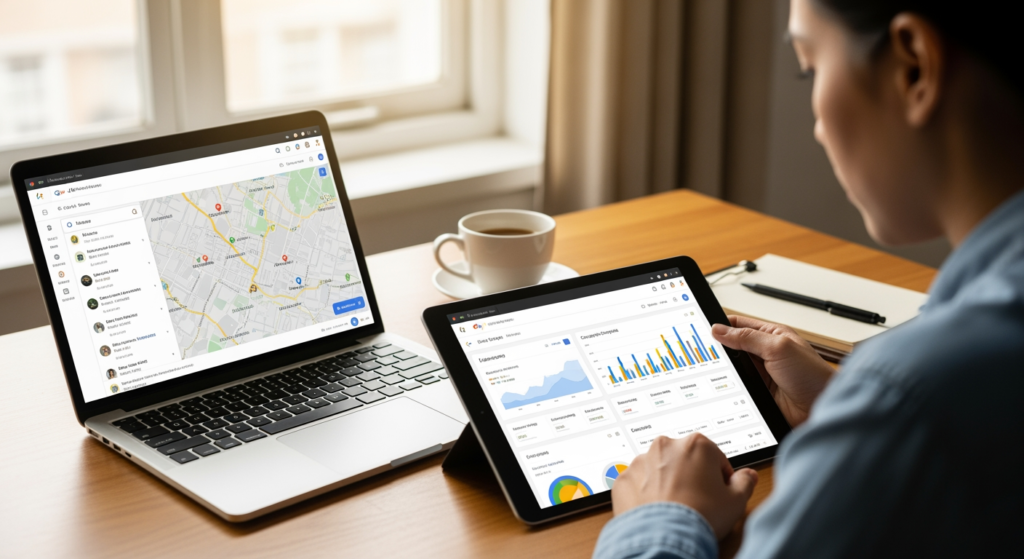
Choosing between local SEO and paid ads can feel like picking between planting a garden and ordering takeout: one compounds over time, the other shows up fast (as long as you keep paying). If you’re a small business owner trying to generate calls, form fills, or foot traffic, the decision matters because it affects your budget, your lead flow, and how you show up in Google Search and Google Maps. This guide compares local SEO vs PPC using clear criteria—speed, cost, control, and long-term value—so you can pick the right mix for your situation. If you’re still building the basics, start with Understanding the Importance of Local SEO for Business Visibility to see how local search fits into the bigger picture.
The Essentials: Local SEO vs PPC
- Need leads quickly? PPC can generate visibility as soon as campaigns are live, while local SEO typically takes time to build momentum.
- Want compounding value? Local SEO work can continue to benefit you after the work is done; PPC visibility usually stops when spend stops.
- Prefer tight control? PPC offers more control over targeting, messaging, and budgets day-to-day; local SEO is influenced by competition and platform rules.
- Trying to own your local presence? Local SEO strengthens Maps/Search visibility, reviews, and listings consistency—often critical for “near me” intent.
- Best option for most small businesses: Use PPC for short-term demand and testing, and local SEO for durable visibility—often as a blended strategy.
Breaking Down the Two Channels (Without the Fluff)
Local SEO is the process of improving how your business appears in local search results—especially Google Maps and localized organic listings. It typically involves your Google Business Profile, consistent business information (name, address, phone), reviews, location relevance, and a website that clearly supports your services and service area.
PPC (pay-per-click) is paid advertising—commonly through Google Ads—where you bid for placement and pay when someone clicks. You can target by location, time, device, and keywords, then route traffic to specific landing pages to drive calls or submissions.
In practice, you’re comparing two different engines: one builds authority and trust signals over time (local SEO), and the other rents attention with a budget and a bidding system (PPC). The right choice depends on your timeline, margins, and how competitive your market is.

Comparison Criteria That Actually Matter for Small Businesses
Below is a practical side-by-side comparison using criteria that tend to impact real-world outcomes: speed, cost structure, predictability, and long-term value.
| Criteria | Local SEO | PPC |
|---|---|---|
| Speed to visibility | Usually slower; improvements often build over weeks/months depending on baseline and competition | Often faster once campaigns are approved and funded |
| Cost model | Typically pays for strategy + implementation; results may continue without paying per click | Pay per click (plus management); visibility is tied to ongoing spend |
| Lead consistency | Can become steadier over time if you maintain listings, reviews, and site quality | Can be consistent while budget and performance hold; can fluctuate with bids and competition |
| Control | Less direct control; dependent on search platform behavior and competitors | More direct control over targeting, messaging, and landing pages |
| Best for | “Near me” intent, Maps visibility, reputation building, long-term demand capture | Promotions, new offers, seasonal spikes, fast testing of services/locations |
| Risk profile | Risk of slow ramp if fundamentals are weak or competition is strong | Risk of wasted spend if tracking, targeting, or landing pages are weak |
The Real Budget Impact: Spend vs Build
For many owners, the decision comes down to cash flow and tolerance for ramp time.
- PPC is a variable cost. You can often scale up or down quickly, but costs can rise as competition increases. If your tracking or landing page is weak, you may pay for clicks that don’t turn into customers.
- Local SEO is more like an asset build. You’re investing in your website, listings, and trust signals. While ongoing maintenance is typically needed, you’re not paying for each individual click.
Value consideration: If you have strong margins and need immediate lead volume, PPC may be easier to justify early. If you want a channel that can reduce reliance on ad spend over time, local SEO is often the steadier long-game. (No channel is guaranteed—competition, demand, and execution all matter.)
Pros, Cons, and Best-Fit Use Cases
Local SEO: Pros
- Compounding visibility: Improvements can continue to help after the initial work.
- Strong fit for local intent: Especially when customers search in Maps or add location modifiers.
- Supports trust: Reviews, accurate listings, and a solid website reduce friction.
Local SEO: Cons
- Slower ramp: Not ideal if you need leads next week.
- Less direct control: Platform changes and competitor activity can affect outcomes.
- Requires consistency: Stale info, weak pages, or neglected reviews can limit results.
Local SEO: Best for
- Service-area businesses (home services, professionals) competing in Maps
- Brick-and-mortar locations that rely on local discovery
- Businesses that want to reduce dependence on paid traffic over time
PPC: Pros
- Speed: Faster path to visibility for high-intent searches.
- Testing: Quickly test which services, offers, or locations convert.
- Control: Adjust budgets, schedules, and targeting with precision.
PPC: Cons
- Stops when spend stops: Leads can drop quickly if budgets pause.
- Can get expensive: Competitive categories may have high cost-per-click.
- Tracking matters: Without clean conversion tracking, it’s easy to misread performance.
PPC: Best for
- New businesses that need immediate demand while SEO foundations are built
- Seasonal campaigns and limited-time promotions
- Businesses with clear conversion paths and strong landing pages

Mistakes That Make Either Option Underperform (Checklist)
- Running ads without conversion tracking: If you can’t measure calls/forms accurately, you’ll optimize based on guesses.
- Sending PPC traffic to a generic homepage: High-intent clicks typically convert better on service-specific landing pages.
- Ignoring Google Business Profile basics: Wrong categories, weak service descriptions, or outdated hours can suppress local visibility.
- Inconsistent NAP across directories: Conflicting name/address/phone data can create trust issues for search platforms and users.
- Chasing tactics instead of fundamentals: Whether it’s “one weird trick” for SEO or a trendy ad type, basics usually win.
- Expecting instant results from organic work: Local SEO is often a momentum game; plan for steady improvement, not overnight miracles.
A Smart Decision Framework You Can Use This Week (Checklist)
- Define your timeline: If you need leads immediately, prioritize PPC while you build local SEO foundations.
- Calculate your allowable cost per lead: Use margins and close rates to set realistic PPC targets.
- Audit your local presence: Verify your Google Business Profile, core citations, and on-site service/location clarity.
- Build one strong landing page per core service: Include clear offers, proof points, FAQs, and a direct call-to-action.
- Use PPC as a testing lab: Identify which services/keywords convert, then prioritize those topics in your local SEO content plan.
- Commit to review generation: A steady review strategy supports both ad conversion rates and local trust signals.
Professional Insight: The Mix Usually Beats the Debate
In practice, we often see small businesses get the best stability when they treat PPC as a throttle and local SEO as the foundation. Ads can fill gaps (new location, slow season, new service), while local search visibility builds credibility and reduces reliance on paid clicks over time. The key is alignment: the same services you advertise should be clearly supported by your website and your business listings, so both channels reinforce each other instead of working at cross purposes.
When DIY Stops Making Sense
- You’re spending on ads but can’t explain what’s working: No clear reporting on calls, forms, and booked jobs is a sign to get help.
- Your business info is inconsistent online: Multiple addresses, wrong phone numbers, or duplicates can require cleanup.
- You’re not showing in Maps for core services: If your profile is set up but visibility is flat, you may need a structured local SEO plan.
- Competitors dominate and you don’t know why: A diagnostic review of categories, content, links, and listings can identify gaps.
- Your website doesn’t convert: If traffic comes in but leads don’t, you may need better pages, messaging, and UX.
Frequently Asked Questions
Can I run paid ads and still work on organic visibility at the same time?
Yes. Many small businesses run ads for immediate demand while improving their website, listings consistency, and Google Business Profile to strengthen long-term local discovery.
Which is better for Google Maps: optimizing my profile or buying ads?
Optimizing your business profile and local signals typically supports Maps visibility. Ads can place you in paid placements, but they don’t replace the need for accurate info and strong local relevance.
What if my budget is too small for competitive clicks?
If clicks are expensive in your category, you can narrow targeting (service area, hours, keywords) and improve landing pages—while also investing in local foundations that don’t charge per click.
How do I know if my website is hurting conversions?
Common signs include high traffic with few calls/forms, confusing service pages, slow load times, and unclear next steps. Reviewing analytics and call tracking can help pinpoint where users drop off.
Taking Action
Local SEO and PPC solve different problems: one builds durable local trust and discovery, the other delivers faster visibility with ongoing spend. If you need immediate leads, ads can help you move now—especially with strong tracking and landing pages. If you want a channel that can compound, local search optimization is usually the steady play. For many small businesses, the most practical approach is using both with clear roles and a shared conversion strategy.
Get Your Free Quote
Find out how we can help with a no-obligation quote.
