



Summer can be a make-or-break season for local businesses: phones ring more, schedules fill faster, and customers search with higher urgency. If your website doesn’t have a focused page that matches what people are looking for right now, you may be sending ready-to-buy visitors back to Google to find someone else. That’s where local landing page SEO comes in—building and optimizing a page designed to rank for a specific local service offer and convert visitors into calls, bookings, or requests.
This guide is for beginners who want a practical, website-design-first approach to getting found locally during peak season. If you’re new to local search strategy, start with Understanding Local SEO for Small Business Visibility to see how your website, business listings, and on-page signals work together.
The Essentials for Summer-Ready Local Pages
- Create one clear page per offer (ex: “AC tune-up,” “pool cleaning,” “patio dining”) so Google and customers know exactly what you do.
- Match the page to summer intent by highlighting seasonal needs, availability, and service areas without overstuffing locations.
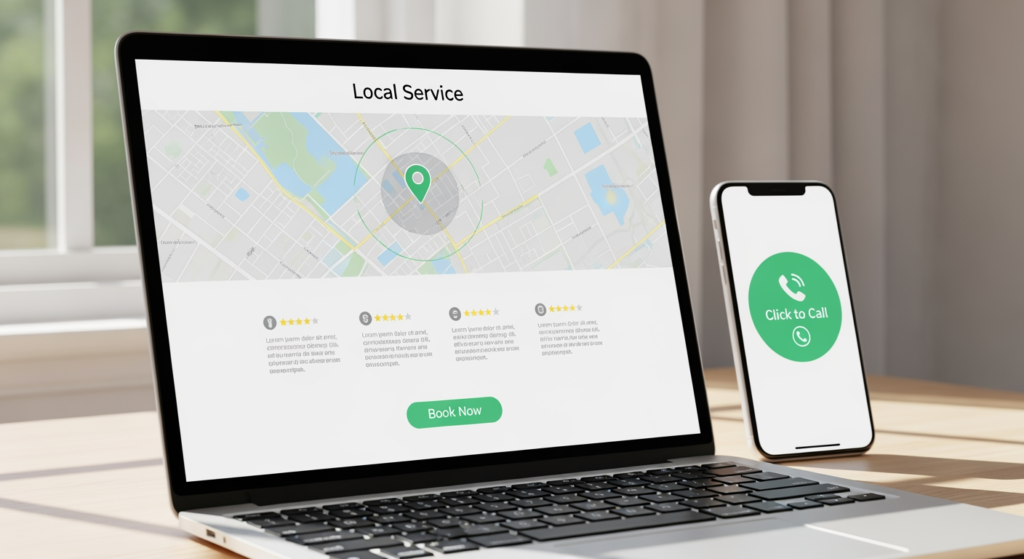
- Use a conversion-first layout with a single primary call-to-action, fast-loading design, and scannable sections.
- Add local trust signals like service-area details, reviews/testimonials, and clear contact info that matches your business listings.
- Track performance using basic analytics and call/form tracking so you can improve the page over time.
How a Summer Local Landing Page Works (In Plain English)
A local landing page is a dedicated page built around one specific service (or offer) for a defined area you serve. It’s different from your homepage because it’s focused. It’s different from a blog post because it’s designed to convert visitors, not just educate them.
In summer, search behavior tends to get more specific and more urgent. People look for solutions like “same-week lawn care,” “emergency AC repair,” or “best brunch patio near me.” A strong landing page helps by doing three jobs at once:
- Relevance: The page clearly matches what the searcher asked for.
- Local clarity: It’s obvious where you operate and how to reach you.
- Conversion: The page makes the next step (call, book, request) easy.
Think of it like a well-labeled aisle in a store. If customers have to wander around your site to figure out what you offer, they’ll leave—especially when it’s 95 degrees and they just want the problem fixed.

The Real-World Impact of Waiting Until Late Summer
Putting off a seasonal landing page usually doesn’t “break” your website—but it can quietly cost you opportunities when demand is highest. Here’s what’s typically at stake:
- Lost leads during peak weeks: If your page doesn’t match the search, visitors bounce and choose a competitor.
- Higher marketing pressure: When organic visibility is weak, businesses often feel forced to rely more on paid options or discounts.
- Operational headaches: Vague pages attract vague inquiries, which can waste time for you and your team.
- Slower improvements: Search engines and customers both respond better when a page has time to earn engagement and trust signals.
Common Summer Landing Page Mistakes (Quick Checklist)
- ☐ Trying to rank one page for every service: A “catch-all” page often reads generic and converts poorly.
- ☐ Stuffing city names everywhere: Repeating locations unnaturally can make pages look spammy and less helpful.
- ☐ Hiding the call-to-action: If users have to hunt for a phone number or form, many won’t bother.
- ☐ Skipping proof: No testimonials, project photos, or clear process makes visitors hesitate.
- ☐ Slow mobile experience: Summer searches happen on phones—heavy sliders and oversized images can drag performance down.
- ☐ Copying the same template across areas: Duplicate or near-duplicate pages can dilute usefulness and confuse what’s unique.
A Simple Action Plan to Optimize Your Summer Offer Page
- Pick one summer offer: Choose the service that’s most in-demand (or most profitable) during the season.
- Write a clear page promise: In the first screen, state what you do, who it’s for, and how to take the next step.
- Add a “service area” section: List the areas you serve in a natural way (not a giant keyword block).
- Use scannable sections: Include “What’s included,” “How it works,” “Pricing approach” (if appropriate), and “FAQ.”
- Strengthen trust: Add reviews/testimonials, licensing/insurance notes (if relevant), and a short “why choose us” section.
- Make contact frictionless: Put a click-to-call button on mobile and keep forms short (name, phone/email, request).
- Optimize basics: Unique title tag, meta description, one main heading, descriptive image alt text, and fast-loading media.
- Measure and iterate: Track calls/forms and update the page based on real questions customers ask.

Professional Insight: What Most Beginners Miss
In practice, we often see businesses focus so much on “getting the page to rank” that they forget the page’s real job: making it easy for a local customer to say yes. The strongest pages read like a helpful, organized sales conversation—clear offer, clear area, clear proof, and a clear next step.
When It’s Time to Bring in a Pro
DIY can work for a basic page, but professional help is worth considering when:
- You have multiple services and multiple areas and aren’t sure how to structure pages without creating duplicates.
- Your site is slow or hard to edit (especially on mobile), and fixes keep piling up.
- You’re getting traffic but not leads, which usually points to layout, messaging, or trust gaps.
- Your business info is inconsistent online (name, address, phone), making it harder for search engines to trust your brand.
- You need a cohesive local strategy, not just a single page, so your website and visibility signals support each other.
Common Questions About Summer Local Pages
Do I need a separate page for each service I offer?
Not always, but having a dedicated page for your most important services usually makes it easier to be relevant in search and clearer for customers. Start with your top 1–2 summer services.
How long should a seasonal service page be?
Long enough to answer the main questions a new customer has: what you do, who it’s for, where you serve, what it includes, and how to contact you. Clarity matters more than word count.
Can I reuse the same content across multiple nearby areas?
It’s better to avoid near-duplicate pages. If you create multiple area-focused pages, make sure each one has genuinely helpful differences—like unique service details, common requests, or specific logistics.
What’s the most important element for conversions on mobile?
A clear, easy next step—usually click-to-call or a short request form—placed where users don’t have to scroll forever to find it.
Taking Action Before the Season Passes You By
A focused summer landing page can help you align your website with what local customers are actively searching for right now. Keep it specific, make it easy to contact you, and support the page with trust signals that reduce hesitation. If you start simple and improve based on real customer questions, you’ll build a page that stays useful beyond summer.
Learn More About Our Services
Discover how we can help you achieve your goals.
