



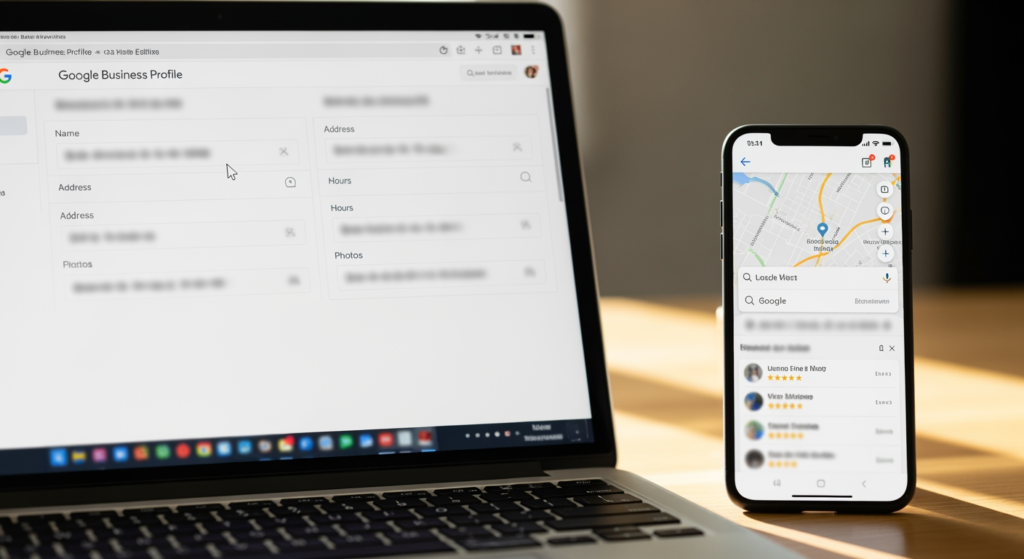
Local search keeps changing in small, high-impact ways—and if you run a local business, those changes can quietly affect calls, direction requests, and booked appointments. This April 2026 roundup of local SEO news is for owners, marketers, and operators who want practical takeaways without living on SEO Twitter. The big themes right now: Google is getting stricter about real-world business legitimacy, AI-driven search experiences are reshaping how people choose who to contact, and “data quality” (your business info consistency across the web) is becoming harder to ignore. If you rely on Google Business Profile, local landing pages, and reviews to drive revenue, these updates matter because they influence visibility, trust, and conversion—often before you notice a drop.
If you need a refresher on the fundamentals these changes build on, start with Understanding Local SEO for Small Businesses.
The Essentials From April 2026
- Google is emphasizing “real business” signals (clear categories, accurate addresses/service areas, and consistent listings) to reduce spam and confusion.
- AI-style search results are raising the bar for clarity: incomplete services, vague location info, and thin pages are less persuasive when users compare options quickly.
- Google Business Profile hygiene is still a top lever: hours, services, photos, and review responses can influence both trust and engagement.
- Citations and NAP consistency remain foundational because they help reinforce authority and reduce mismatch errors across platforms.
- Expect more “zero-click” behavior where users decide directly from the results page—making your on-SERP presentation (GBP + reviews) even more important.
What’s Driving These Local Search Shifts Right Now
A noticeable pattern in local search lately is the push toward verification, consistency, and context. Google’s local ecosystem has to balance two competing goals: show the best nearby options quickly, and keep spam or misleading listings out of the way. That naturally increases scrutiny on business identity signals—things like stable NAP (name, address, phone) data, accurate categories, and a Google Business Profile that matches what your website and directories say.
At the same time, AI-driven discovery experiences (including conversational and summary-style results) are compressing the decision process. People compare providers faster, often without clicking through multiple sites. That means your “local footprint” needs to be easy to understand at a glance: what you do, where you do it, and why you’re credible.

The Business Impact: Visibility, Leads, and Fewer Second Chances
These updates can affect your business in a few very practical ways:
- Time cost: Fixing inconsistent listings (old phone numbers, duplicate profiles, outdated addresses) is usually harder after problems compound.
- Lead quality: When users decide from the results page, unclear service descriptions or wrong hours can filter out good prospects—or attract the wrong ones.
- Conversion rate: A strong GBP (photos, reviews, services, attributes) can win the click or call even when rankings are competitive.
- Operational friction: Mismatched information can create real-world issues (missed appointments, wrong location visits, customer frustration).
- Reputation pressure: Review volume and responsiveness can matter more when users compare options side-by-side in a condensed interface.
None of this guarantees a specific ranking outcome—local results vary by market and competition—but it does mean the basics are increasingly tied to trust and eligibility, not just “SEO best practice.”
Common April 2026 Missteps (Use This Checklist)
- Leaving old duplicates live: Multiple listings for the same business can split signals and confuse customers.
- Setting a service area that doesn’t match reality: Overstating coverage can lead to irrelevant visibility and poor engagement.
- Using a “catch-all” primary category: A vague category can weaken relevance when Google tries to match intent to a provider.
- Thin location/service pages: Pages that don’t clearly explain services, service boundaries, and proof points often underperform in competitive markets.
- Ignoring review responses: Not replying (or replying poorly) can reduce trust when users scan quickly.
- Inconsistent NAP formatting: Small differences (suite numbers, abbreviations, old tracking numbers) can create mismatches across directories.
A Smart Action Plan for the Next 30 Days
- Audit your Google Business Profile fields: confirm categories, services, hours, phone, website URL, and service area are accurate and complete.
- Check for duplicates and conflicts: search your business name + old addresses/phone numbers and document any listings that need cleanup.
- Refresh your proof signals: add recent photos, update service descriptions, and ensure your “about” messaging matches what you actually sell.
- Standardize NAP everywhere: pick one canonical format (including suite/unit) and apply it consistently across key directories.
- Strengthen your local pages: add clear service explanations, FAQs, and internal structure so users (and crawlers) understand coverage and specialties.
- Build a review response habit: set a weekly cadence to respond to new reviews with specific, helpful language.
Professional Insight: The “Data Confidence” Gap We See
In practice, we often see local businesses do plenty of “marketing work” (posting, promotions, even blogging) while their underlying business data is still inconsistent—old phone numbers in directories, mismatched hours, duplicate listings, or unclear categories. When local search systems tighten quality thresholds, that data confidence gap can become the silent reason visibility plateaus or leads get weird.
When DIY Local SEO Stops Being Enough
- You find duplicate or merged listings and aren’t sure which one is authoritative.
- Your business moved or changed phone numbers and old info still appears in search results or map apps.
- You’re in a spam-heavy category (common in home services and professional services) and rankings swing unpredictably.
- You’re adding new locations or service lines and need a scalable way to keep listings, pages, and schema consistent.
- Your GBP engagement is fine but leads are down, suggesting a mismatch between what’s shown in results and what customers expect.
Frequently Asked Questions
How often should I update my Google Business Profile details?
Update immediately when anything changes (hours, phone, services, address). Even without changes, a monthly review helps catch accidental edits, duplicates, or outdated fields.
Do citations still matter if my website is strong?
Citations can still help reinforce consistency and reduce confusion across platforms. A strong site is important, but mismatched listings can create trust and eligibility issues in local results.
Why do local results change even when I didn’t change anything?
Local results can shift due to competitor updates, proximity factors, category changes, review velocity, or platform-side adjustments. That’s why ongoing maintenance tends to outperform one-time setup.
Should I focus more on my website or my business listing?
For many local searches, your listing is the first (and sometimes only) touchpoint. Your website still matters for depth and conversion, but keeping both aligned usually works best.
What’s one quick win to improve local trust signals?
Make sure your hours, services, and primary category are accurate, then add a small set of recent photos and respond to your newest reviews. These steps improve clarity for both users and platforms.
Your Next Steps After This April Roundup
April’s updates point in a clear direction: local visibility increasingly rewards accurate business data, strong on-SERP presentation, and consistent signals across the web. If you haven’t reviewed your GBP fields, citations, and core local pages recently, a short audit can prevent avoidable issues. Focus on clarity first—what you do, where you do it, and how customers can trust you—then build depth and consistency over time.
Get in Touch
Fill out our quick form and we’ll get back to you within 24 hours.
