



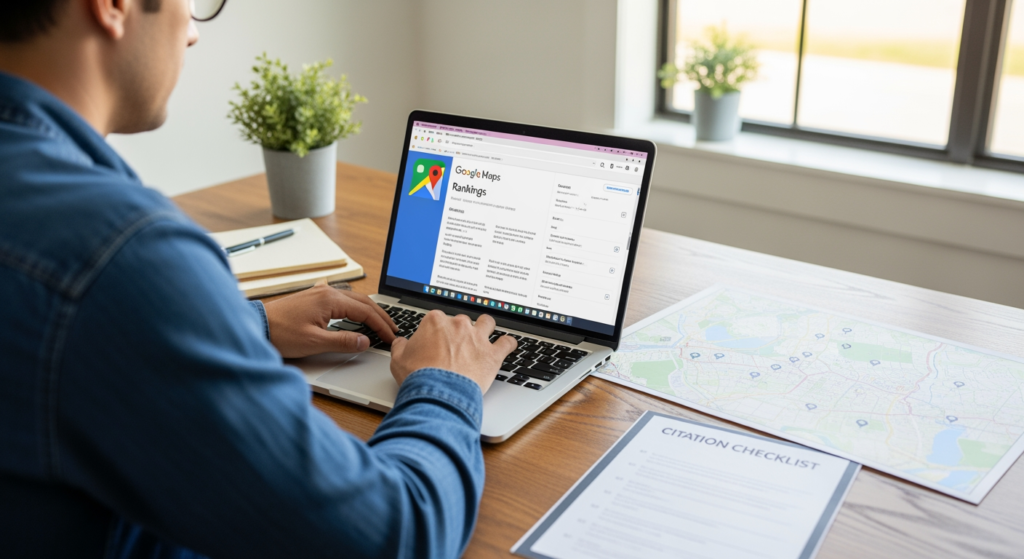
Service area businesses often struggle in Google Maps because the platform is designed to prioritize clear, verifiable location signals—yet many SABs intentionally hide their address or operate without a storefront. If you’re a plumber, roofer, HVAC company, mobile pet groomer, or any business that travels to customers, these visibility gaps can show up as fewer calls, fewer direction requests (even if you don’t need them), and fewer opportunities to appear for “near me” searches.
The good news is that most issues are fixable once you know what to look for. Many of the biggest problems come from inconsistent business data, category mismatches, weak location relevance signals, or listing settings that don’t align with how Google expects an SAB to be represented. For foundational context, see Maximizing Local SEO for Service-Area Businesses.
The Essentials for SAB Map Visibility
- If you’re not showing in Maps, it’s often a signals problem—not a “penalty.” Categories, service areas, and business data consistency commonly drive visibility issues.
- Hidden-address listings can rank, but they need strong supporting evidence. Reviews, citations, and website location cues matter more when you don’t have a public storefront address.
- Too many or mismatched service areas can dilute relevance. Overly broad coverage can make it harder to appear in specific local searches.
- Duplicate or old listings can split trust. Competing profiles (or outdated NAP) can confuse Google and customers.
- Small profile mistakes can create big visibility drops. Wrong primary category, weak services, or inconsistent contact info can hold you back.
Why Google Maps Is Tricky for Service-Area Companies
Google Maps uses a mix of relevance, distance, and prominence signals to decide which businesses to show. For a service-area company, “distance” can be harder to interpret because you may not display a public address. That means Google often leans more heavily on other evidence—like consistent business listings across the web, clear service definitions, strong review signals, and website content that matches the areas you serve.
Another common challenge: many SABs try to cover a large region. From Google’s perspective, that can create ambiguity. If your profile says you serve 30 towns, but your website and third-party listings don’t strongly support those locations, the listing may struggle to appear consistently for searches in all those places.

The Real-World Cost of Map Visibility Issues
When your Maps presence is unstable, the impact is usually gradual—but meaningful. You may notice fewer calls, fewer website visits from local intent searches, or a drop in the quality of leads (people outside your true service radius).
- Time: You spend more time answering “Do you serve my area?” because your visibility isn’t aligned with your actual coverage.
- Budget: You may feel pressure to compensate with paid channels or discounts instead of fixing the root listing problems.
- Operations: Poor targeting can send you to jobs that are too far away, lowering profit per job.
- Reputation: Inaccurate hours, service info, or phone numbers can create missed calls and negative reviews.
Red Flags That Signal Your Maps Listing Is Holding You Back
- You rank in one neighborhood but disappear a few miles away.
Why it matters: this often points to weak location relevance signals or an overly broad service area setup.
What to do: tighten your service area to what you truly cover, and strengthen location cues on your website (service pages, FAQs, and contact info consistency). - Your primary category doesn’t match your main service.
Why it matters: category selection heavily influences which searches you can appear for.
What to do: confirm your primary category reflects your core revenue service; move secondary offerings into additional categories/services. - You have multiple Google Business Profiles (or old ones still live).
Why it matters: duplicates can split ranking signals and confuse customers.
What to do: identify duplicates, request removal/merge where appropriate, and standardize your business name, phone, and website across every profile. - Your phone number or business name varies across directories.
Why it matters: inconsistent NAP (name, address, phone) reduces trust signals.
What to do: run a citation consistency check, fix mismatches, and remove outdated listings that reference old numbers or brands. - Your service area is huge “just in case.”
Why it matters: a massive radius can dilute relevance and lead to poor-quality leads.
What to do: choose a realistic coverage area based on where you can actually serve profitably; support edge areas with strong website content and consistent listings. - Your GBP services are empty or generic.
Why it matters: vague services reduce relevance for specific searches.
What to do: add specific services you provide (and keep them aligned with on-page service descriptions). - Reviews mention the wrong city—or never mention where you work.
Why it matters: review content can reinforce relevance for locations and services.
What to do: request reviews with a simple prompt that encourages customers to mention the service performed and general area (without scripting or incentivizing). - Your website and GBP don’t “agree” about what you do.
Why it matters: mismatched messaging can weaken relevance signals.
What to do: align your homepage, service pages, and schema with your GBP categories/services and the areas you serve.
A Practical Fix-First Plan for Service-Area Map Problems
- Confirm your GBP fundamentals: correct business name, phone, website URL, hours, and primary category.
- Right-size your service area: focus on your profitable core coverage; avoid “everything within 100 miles” unless it’s truly supported.
- Build service clarity: add specific services in GBP and mirror them on dedicated website service sections/pages.
- Clean up duplicates: locate old profiles, old practitioner listings (where relevant), and outdated addresses/phones and resolve them.
- Standardize citations: ensure your NAP is consistent across major directories and industry platforms.
- Strengthen local proof: publish helpful location-aware content (without creating thin pages), and earn reviews that reflect real jobs.
- Track changes: document edits and watch for visibility shifts over the next several weeks (rankings can fluctuate naturally).

Professional Insight: The SAB Mistake That Keeps Reappearing
In practice, we often see service-area companies set up their profile like a broad “regional business” while their website and listings still read like a single-town provider. That mismatch makes it harder for Google to confidently match the business to searches across the whole region. When the profile, citations, and on-site content tell the same story, visibility tends to become more consistent.
When DIY Fixes Aren’t Enough
Consider professional help if any of the following are true:
- Your listing keeps getting suspended or requires repeated re-verification.
- You’ve found duplicates you can’t remove or merge.
- You changed categories/service areas and visibility dropped sharply for weeks.
- Your business has multiple technicians, departments, or brands and you’re unsure how to structure profiles.
- Your citations are widespread and inconsistent (old addresses, tracking numbers, or legacy business names).
Common Questions Answered
Can a business that hides its address still appear on Google Maps?
Yes. Many mobile and at-home service providers can appear in Maps, but they typically need strong supporting signals like consistent listings, clear categories, and a website that matches the services and areas served.
How many cities should I add to my service area?
Add only the areas you can realistically serve and support operationally. Overly broad coverage can dilute relevance and attract leads that aren’t a good fit.
Do reviews affect local visibility for mobile service providers?
Reviews can influence trust and conversion, and they may support relevance when they naturally mention services performed and general areas served. Avoid incentives or scripted language.
Why do I show up in organic results but not in the map results?
Organic rankings rely heavily on your website, while map visibility depends more on your business profile, proximity signals, and prominence signals like reviews and citation consistency.
Will fixing citations instantly improve map visibility?
Not always. Data updates can take time to be reflected across platforms, and visibility can fluctuate. Consistency is still a foundational step that supports long-term stability.
Your Next Steps
If your Maps presence feels inconsistent, start by identifying which warning signs apply: category mismatch, duplicates, inconsistent business data, or an overly broad service area. Then work through the fix-first plan to align your profile, website, and listings around the same service story. Small changes—done correctly—can remove friction that keeps you from appearing in the searches you care about. If the issues involve suspensions, duplicates, or widespread data conflicts, getting expert support can save time and prevent repeated setbacks.
Ready to Get Started?
Our team is here to help. Give us a call to discuss your needs.
