from 77 reviews on Google
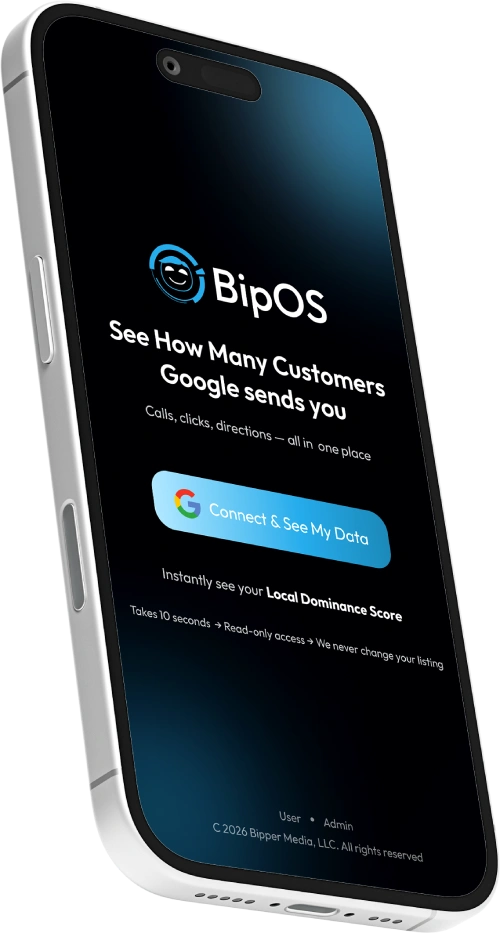
Manage your SEO, approve posts, and keep an eye on every client — right from your phone. Real-time alerts mean nothing slips through the cracks.
Free for all BipOS clients & white-label partner admins.
Curious about how strong your website is in the eyes of Google? Just enter your domain below, and get an instant score to see how well you are against the competition.
Bipper Media is a full-service digital marketing agency helping businesses grow their online presence. We believe in the power of digital media to transform brands and deliver measurable success.


Our tool can be used to check a website’s Domain Authority (DA) score. To do so, enter the website’s URL into the tool’s search box and click the “Check SEO Authority” button.
This tool will show the score from 1 to 100, which tells you how well the website might rank in search results. A higher score means the website is more likely to rank well.

This service combines advanced SEO techniques to give your website a significant boost in search engine rankings, making it easier for customers to find you.

We design and develop custom websites that are not only visually appealing but also user-friendly and optimized for performance, ensuring a great experience for your visitors.

Our local SEO service focuses on optimizing your online presence to attract more business from relevant local searches, driving traffic to your site and foot traffic to your location.

We build and manage citations for your business on high-authority local websites, which improves your visibility in local search results.

We create targeted city-specific pages that help your business rank higher in local search results, attracting more customers from your area.

We help improve your website’s authority by acquiring quality backlinks from trusted sources, boosting your site's credibility and search engine rankings.

Schema Markup Optimization helps search engines better understand your website so you can earn enhanced search results, boost visibility, and attract more clicks than competitors using basic SEO alone.

Our team creates engaging blog posts tailored to your audience, and we ensure they reach a wider audience through syndication across multiple platforms.

We distribute your business information to major data aggregators, ensuring your details are accurate across the web, which helps with local SEO efforts.

At Bipper Media, we believe in data-driven decision-making. We’ve helped numerous clients achieve their business goals through customized digital marketing strategies that yield measurable results. We understand that every business is different, which is why we create marketing strategies that are specifically tailored to your unique needs and goals.
Read reviews about our amazing work, highlighting our professional and knowledgeable team, excellent service and communication, and significant improvements in SEO and website development.
Explore our comprehensive portfolio of web development projects, meticulously designed and innovatively crafted by Bipper Media. Our team specializes in creating websites that not only look amazing but also drive significant traffic, leads, and sales for both local businesses and large enterprise clients.
Our management team comprises experienced leaders who guide our efforts and ensure our clients’ highest level of service. Each manager brings unique skills and a deep understanding of the digital marketing landscape.

Founder

Chief Executive Officer

Chief Financial Officer

Chief Operating Officer


Our team consists of skilled professionals who are dedicated to helping your business succeed online. We bring a wealth of knowledge and experience to every project.
Whether you need to boost your search rankings, create engaging content, or develop a user-friendly website, our team is here to deliver results tailored to your goals.


Join our community and receive valuable insights straight to your inbox, helping you grow your business online.
Explore our blog for valuable insights, tips, and the latest trends in digital marketing. Our articles cover a wide range of topics, from SEO strategies to content marketing, helping you stay informed and ahead of the competition.
SEO stands for Search Engine Optimization. It is the process of improving the visibility of a website or web page in search engine results pages (SERPs). SEO can be done through a variety of methods, including:
SEO services are offered by a variety of companies, both large and small. These companies can help businesses improve their website’s SEO by providing them with advice, tools, and services.
Here are some of the benefits of using SEO services:
If you are looking to improve your website’s SEO, then you should consider using SEO services from a reputable and experienced provider such as Bipper Media. Bipper Media specializes in website design, SEO, and Local SEO, catering to both local and small businesses as well as large enterprise clients. With over a decade of experience, Bipper Media has been helping clients grow their businesses by increasing their rankings, and visibility in search engines like Google and Google Maps
The cost of SEO services can vary depending on several factors, including the size and complexity of the website, the level of competition in the industry, and the specific services that are required. However, in general, SEO services can range in price from a few hundred dollars per month to several thousand dollars per month.
Here are some of the factors that can affect the cost of SEO services:
It is important to note that SEO is an ongoing process, and the cost of SEO services will typically increase over time as the website continues to grow and evolve. However, the benefits of SEO can also be significant, as SEO can help to increase website traffic, improve brand awareness, and boost sales.
We at Bipper Media can offer customized SEO packages tailored to your specific needs, ensuring you get the best value for your investment. Whether you need ongoing monthly services, a one-time project, or hourly consulting, Bipper Media can help you navigate the complexities of SEO and drive your business forward.
Bipper Media provides a comprehensive range of digital marketing services designed to enhance your online presence and drive business growth. Our offerings include SEO (Search Engine Optimization) to boost your site’s visibility on search engines, custom website development tailored to your brand’s needs, content creation for web pages and blogs, and local SEO services that help you connect with customers in your area.
We also offer specialized services like backlinks building, business listings in our directory, and advanced SEO power boosters. Each service is crafted to meet your unique business goals and help you succeed online.
Adding your business to our directory is a simple process that can significantly enhance your online visibility. Start by visiting the Business Listings section on our website, where you’ll find an easy-to-use form for submitting your company’s information.
You’ll need to provide details such as your business name, address, contact information, and a brief description of your services. Once submitted, your listing will be reviewed and published in our directory, making it accessible to potential customers who visit our site. This can drive more traffic to your website and help you attract new clients.
The timeline for seeing results from SEO (Search Engine Optimization) services can vary depending on several factors, including the competitiveness of your industry, the current state of your website, and the specific strategies we implement.
Generally, our clients begin to see noticeable improvements in their search engine rankings within 1 to 6 months. However, SEO is a long-term investment, and the most significant results are often seen over a longer period as we continue to optimize and refine your strategy. Our team will work closely with you, providing regular updates and reports to track progress.
What sets Bipper Media’s SEO services apart is our personalized approach to each client’s needs. We don’t believe in one-size-fits-all solutions; instead, we take the time to understand your business, industry, and target audience to create a custom SEO strategy that aligns with your goals.
Our team stays updated on the latest SEO trends and best practices, ensuring that we use cutting-edge techniques to improve your search engine rankings. Additionally, we focus on both the technical aspects of SEO and high-quality content creation, ensuring your website is optimized for both search engines and user experience.
Yes, we provide comprehensive website maintenance services to ensure your site remains secure, up-to-date, and fully functional after it goes live. Our maintenance services include regular software updates, security monitoring, and backups to protect your site from potential threats.
We also perform ongoing performance optimizations to ensure your website continues to run smoothly and efficiently. If you ever encounter issues or need to make updates, our support team is available to assist you promptly. By maintaining your website, we help you avoid downtime and ensure a seamless experience for your visitors.
Absolutely! At Bipper Media, we understand that every business has unique needs and that your website content should reflect your brand’s voice and goals. Our web page content service allows you to request custom content that is tailored specifically to your business.
Whether you need compelling copy for product pages, informative articles for your blog, or engaging descriptions for your services, our team of experienced writers is here to help. We ensure that all content is SEO-friendly, helping your site rank higher in search results while providing valuable information to your visitors.
A city page is a specialized landing page that targets potential customers in a specific geographical area. These pages are designed to rank well in local search results by focusing on location-specific keywords and content relevant to that area.
For businesses that operate in multiple locations or want to attract local customers, city pages can be incredibly beneficial. They help improve your visibility in local searches, making it easier for customers in your target area to find you. By creating well-optimized city pages, we can help you capture more local traffic and increase your chances of converting visitors into customers.
Our Blog Posts with Syndication Service is a comprehensive offering that not only provides you with high-quality, professionally written blog posts but also ensures that these posts reach a wider audience. Here’s how it works:
Benefits of Syndication
Choosing Bipper Media’s Local SEO Service is a smart decision for businesses looking to attract more local customers. Our local SEO strategies are tailored to improve your visibility in local search results, making it easier for nearby customers to find you.
We optimize your Google My Business profile, build local citations, and create content that targets local keywords relevant to your business. These efforts increase your chances of appearing in the coveted “local pack” results on Google, driving more traffic to your site and more customers to your physical location. Our local SEO service is designed to give you a competitive edge in your local market
At Bipper Media, we have the expertise to develop a wide range of websites to suit different business needs. Whether you require a simple, informative website to showcase your services, a blog to share industry insights or a complex e-commerce platform to sell products online, we’ve got you covered.
Our development process is tailored to your specific requirements, ensuring that your website is not only visually appealing but also user-friendly and optimized for search engines. We also focus on creating responsive designs that provide an excellent user experience across all devices, helping you reach and engage with your audience effectively.
Deciding which digital marketing service is right for your business can be challenging, but we’re here to help you make the best choice. During our consultation process, we take the time to understand your business goals, challenges, and target audience. We analyze your current online presence and identify areas of improvement.
Based on this information, we recommend the services that will be most effective in achieving your objectives. Whether you need to improve your website’s SEO, enhance your content strategy, or increase your local visibility, our tailored recommendations will guide you toward the right solution for your business.
A data aggregator from Bipper Media is a service that collects and distributes your business information to various online directories, search engines, and other platforms. These aggregators ensure that your business details, such as your name, address, phone number, and hours of operation, are consistent across the web. This consistency is crucial for local SEO, as search engines like Google use this information to verify the accuracy and legitimacy of your business.
To effectively push your business information across the web, you can use these powerful data aggregators:
By using these data aggregators, you can improve your local search rankings and ensure that potential customers find accurate information about your business wherever they search online
Yes, at Bipper Media, we believe in transparency and keeping our clients informed. We provide detailed reports and regular updates on the performance of your digital marketing campaigns.
These reports include metrics like website traffic, conversion rates, keyword rankings, and more, giving you a clear view of how your campaigns are progressing. We also use analytics tools to track user behavior on your site, helping us make data-driven decisions to optimize your campaigns further. By tracking progress, we ensure that your marketing efforts are